

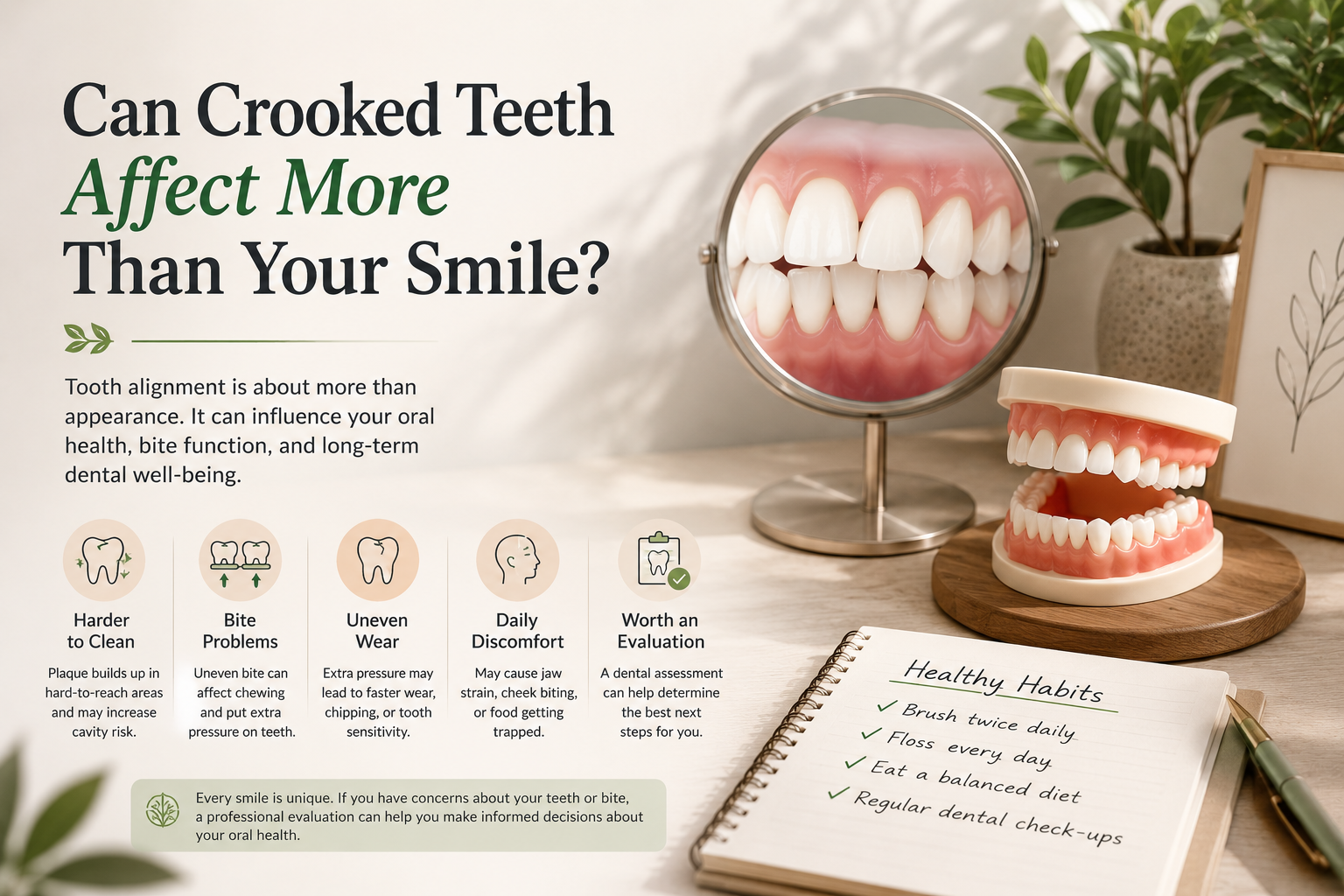
Many people associate crooked teeth with appearance, but tooth alignment can influence much more than the way your smile looks. The position of your teeth may affect how easily you can clean them, how your bite functions, and how evenly your teeth wear over time.
Not everyone with crooked teeth experiences dental problems, and not everyone requires orthodontic treatment. However, understanding the connection between tooth alignment and oral health can help you recognize when a professional assessment may be beneficial.
1. Crooked Teeth Can Make Oral Hygiene More Challenging
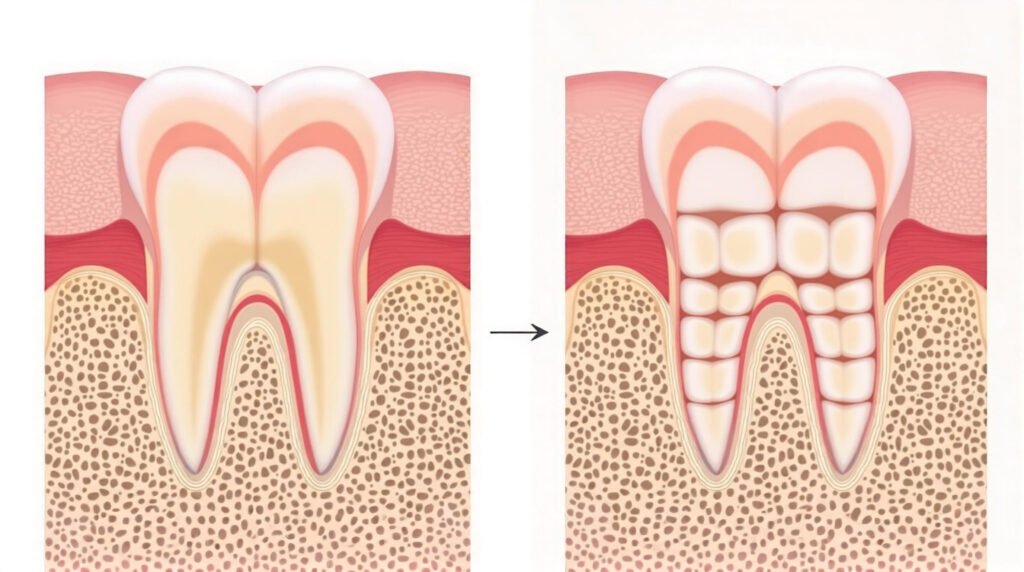 Educational illustration comparing properly aligned teeth with crowded teeth to demonstrate how tooth alignment can affect oral health.
One of the most common concerns with crowded or overlapping teeth is that they can be more difficult to clean thoroughly.
When brushing or flossing becomes challenging, plaque and food particles may remain in areas that are difficult to reach.
This may increase the risk of:
-
- Tooth decay
-
- Plaque accumulation
-
- Gum inflammation
-
- Persistent bad breath
Maintaining good oral hygiene becomes especially important when teeth are crowded.
2. Tooth Alignment Can Influence Your Bite

Your bite refers to how your upper and lower teeth come together when you close your mouth.
When teeth do not align properly, certain teeth may experience more pressure than others during chewing.
Some people may notice:
-
- Uneven tooth contact
-
- Difficulty chewing certain foods
-
- Increased pressure on individual teeth
-
- Changes in the way their bite feels
These changes can vary greatly from person to person and should be assessed individually.
3. Uneven Pressure May Lead to Tooth Wear

Every time you chew, your teeth work together to distribute pressure across your bite.
If certain teeth carry more force than others, they may wear down more quickly over time.
Possible signs include:
-
- Flattened biting surfaces
-
- Small chips along tooth edges
-
- Increased sensitivity
-
- Changes in how teeth fit together
Tooth wear can occur for many reasons, which is why a professional examination is important.
4. Daily Comfort May Be Affected

Some people with crooked teeth experience small day-to-day challenges that they may not immediately associate with tooth alignment.
These may include:
-
- Frequently biting the inside of the cheeks
-
- Food becoming trapped between teeth
-
- Difficulty chewing certain foods
-
- Feeling that the bite has changed over time
These symptoms do not always indicate a serious concern, but they may be worth discussing with a dental professional.
5. When Should You Consider a Dental Assessment?

If you have questions about your tooth alignment, an examination can help determine whether treatment, monitoring, or no intervention is appropriate.
You may wish to schedule an assessment if you notice:
-
- Crowded or overlapping teeth
-
- Difficulty cleaning between teeth
-
- Changes in your bite
-
- Uneven tooth wear
-
- Ongoing discomfort while chewing
Not every alignment concern requires orthodontic treatment. A clinical examination helps determine the most appropriate approach based on your individual oral health.
Final Thoughts
Crooked teeth are often viewed as a cosmetic concern, but they may also influence oral hygiene, bite function, and long-term tooth wear. Because every person’s teeth and jaw develop differently, the effects of misalignment can vary considerably.
If you have concerns about your teeth or bite, an in-person evaluation with a qualified dental professional can help determine whether monitoring or treatment may be appropriate.
This article is intended for general educational purposes only. Diagnosis and treatment decisions require a clinical examination and personalized advice from a qualified dental professional.
Book Your Consultation with Dr. Ramesh Agrawal
If you’re in Toronto or the GTA and have concerns about your or your child’s teeth alignment, our team is here to help.
Take the first step toward a healthier smile today.
 Call us to book your appointment

