
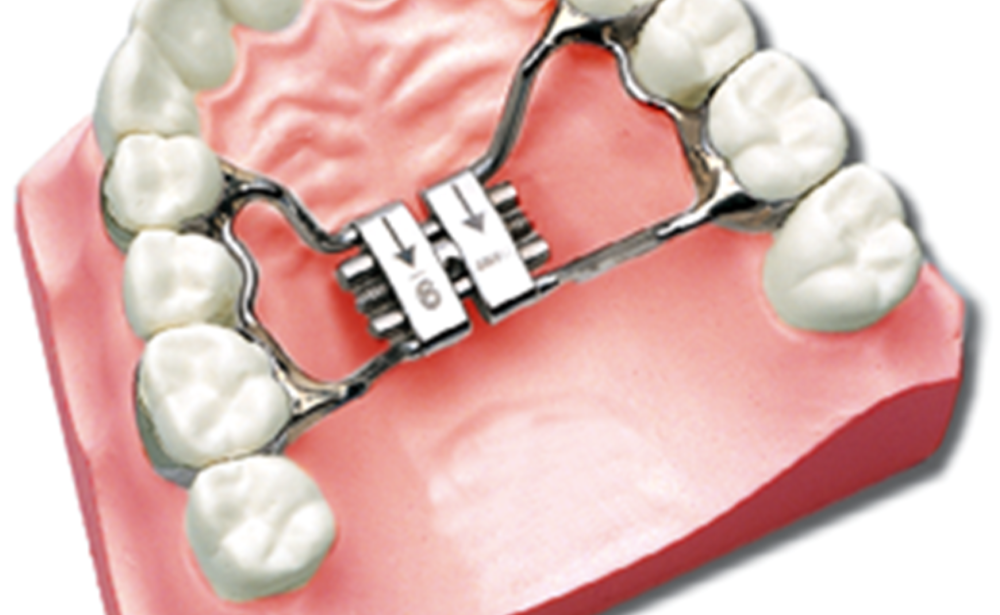
Palatal Expander
Orthodontic expanders are devices used to gradually widen the upper jaw (palate) when it is too narrow. Creating additional space can help improve how the upper and lower teeth fit together and may assist in creating room for developing or crowded teeth. Expanders are often used in growing children because their upper jaw bones are still developing and can respond well to gentle expansion.
What an Expander Is Made Of
An expander is usually custom-made to fit the patient’s mouth. It typically consists of:
Bands or Caps – These fit over certain back teeth to help secure the appliance in place.
Expansion Screw – Located in the center of the appliance, this gently widens the device when activated.
Connecting Framework – This helps support the expansion and stabilizes the appliance inside the mouth.
How an Expander Works
The expander is attached to the upper teeth and sits against the roof of the mouth. A small key or built-in mechanism is used to slowly activate the screw as directed by the dental team. This creates controlled pressure that helps the palate gently widen over time. Adjustments are typically completed over a set period, followed by a stabilization phase to allow the new bone to form and support the change.
Patients may feel pressure or a slight stretching sensation at first, and some may notice temporary changes in speech, chewing, or increased saliva for a short time as they get used to the appliance. These sensations generally improve as the mouth adapts.
Who May Benefit from an Expander
Expanders are commonly used in children and adolescents when growth is still occurring. They may be recommended in situations such as narrow upper jaws, crossbites, or limited space for developing teeth. Your dental office will carefully assess your child’s bite, growth pattern, and orthodontic needs to determine whether an expander may be an appropriate part of treatment.
Patients may feel pressure or a slight stretching sensation at first, and some may notice temporary changes in speech, chewing, or increased saliva for a short time as they get used to the appliance. These sensations generally improve as the mouth adapts.
Caring for an Expander
Good brushing around the appliance is important to help keep the teeth and gums healthy. Regular check-ups allow the dental team to monitor progress and make adjustments as needed.
To learn more about orthodontic expanders and whether they may be suitable for your child, please contact our office to schedule a consultation.
Patients may feel pressure or a slight stretching sensation at first, and some may notice temporary changes in speech, chewing, or increased saliva for a short time as they get used to the appliance. These sensations generally improve as the mouth adapts.